
How Do You Plan a Future When Caregiving Is Unpredictable?
One of the hardest things about caregiving is that you rarely know what comes next.
Your parent may be doing well today.
Three months from now, things could look exactly the same.
Or one fall, hospitalization, diagnosis, or change in mobility could rearrange everything.

Watching Everyone Else Move Forward While You Stay Put
There’s a particular kind of loneliness that can come with caregiving.
It isn't necessarily about being physically alone.
It's watching everyone else's life continue to move while yours feels strangely suspended.

When Caregiving Puts Your Life on Hold
There’s a strange thing that can happen when someone you love begins to need more care.
Your life doesn’t exactly stop.
You still get up in the morning. You pay bills. You make dinner. You answer emails. You go to appointments. You handle whatever needs handling.
From the outside, your life may look fairly normal.
But inside, it can feel like you’ve stopped moving forward.

Rest Looks Different for Caregivers
When people tell caregivers to “get some rest,” it can feel almost laughable.
Rest when?
Between doctor’s appointments?
While waiting at the pharmacy?
After answering phone calls, preparing meals, organizing medications, paying bills, and keeping everything else running?

Taking Care of Yourself Isn’t Selfish—It’s Part of Caregiving
If you’re a caregiver, you’ve probably heard it before.
“Don’t forget to take care of yourself.”
It’s good advice.
But it can also feel impossible.

When 911 Is Called: Information You’ll Want Ready
It’s the phone call—or the moment—every caregiver hopes never comes.
A fall.
Chest pain.
Difficulty breathing.
Sudden confusion.
A medical emergency that requires calling 911.

Preparing for Emergencies Without Living in Fear
No one likes to think about emergencies.
It’s uncomfortable.
Sometimes it feels like talking about them might somehow make them more likely to happen.
So we put off the conversations.

Getting Important Information Organized Before There’s a Crisis
No one plans for the phone call that comes in the middle of the night.
Or the unexpected trip to the emergency room.
Or the doctor’s question you weren’t prepared to answer.
In those moments, it’s easy to feel overwhelmed.

The Conversations Most Families Wait Too Long to Have
There are some conversations we all know we should have.
We just keep telling ourselves there will be more time.
We’ll talk about it after the holidays.
After the next doctor’s appointment.
When things calm down.
When Mom feels better.
When Dad is ready.
But life rarely waits until we feel ready.

The Ordinary Memories You’ll Miss the Most
When we imagine the memories we’ll carry after someone we love is gone, we often think of the big moments.
Birthdays.
Holidays.
Graduations.
Weddings.
Family vacations.
Those memories are precious.
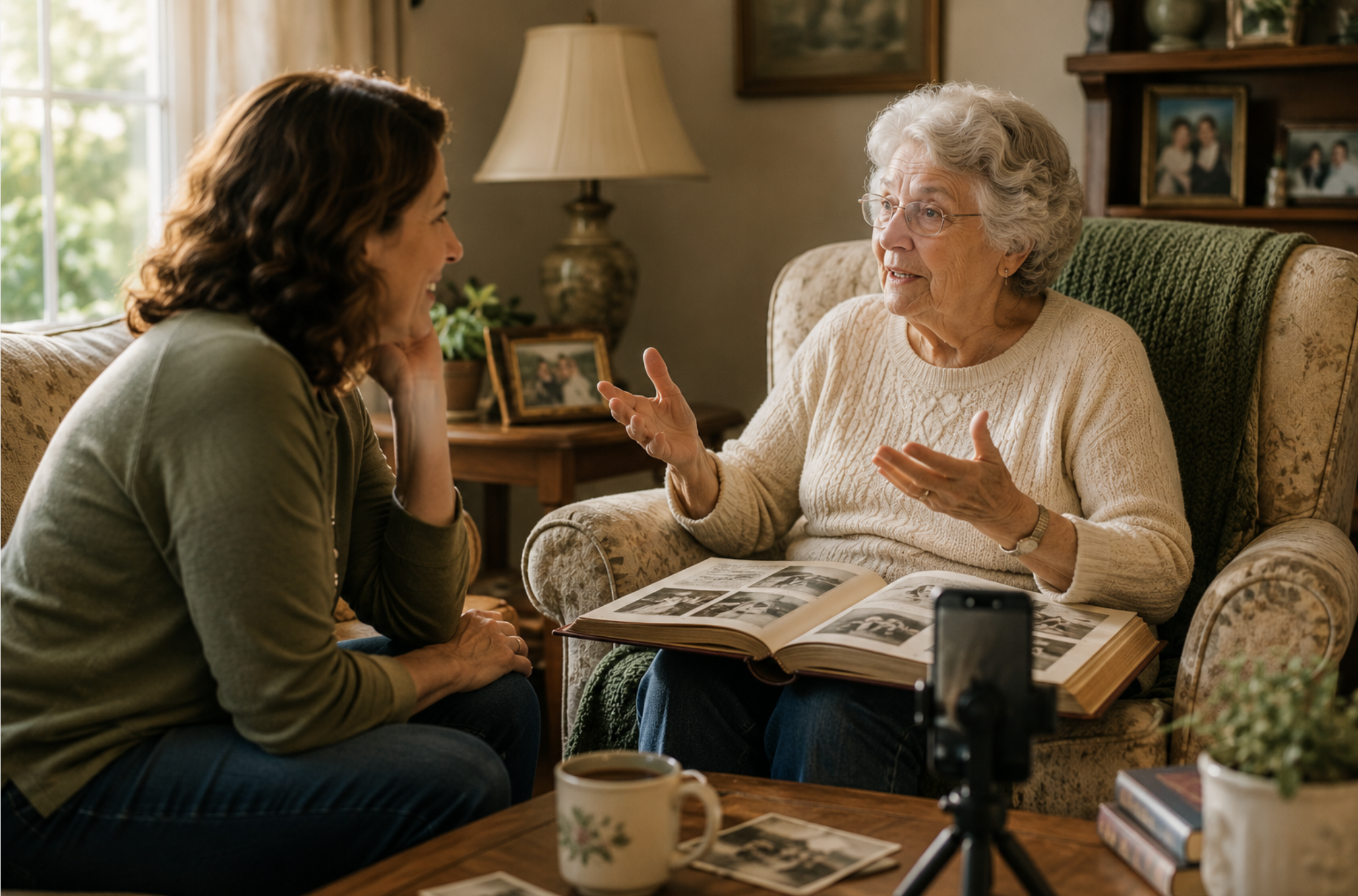
Recording Family Stories Before They’re Lost
Caregiving often fills our days with practical responsibilities.
Doctor’s appointments.
Medication schedules.
Insurance paperwork.
Grocery lists.
Phone calls.
We spend so much time making sure everything gets done that it’s easy to overlook something just as important.

Questions You’ll Be Glad You Asked Your Parent
When we’re caring for an aging parent, our conversations often become practical.
“Did you take your medication?”
“What time is your appointment?”
“Do you need anything from the grocery store?”
Those questions matter.
But they’re not the only questions worth asking.

Why Asking for Help Is a Skill
Many caregivers know they need help.
They just don’t know how to ask for it.
If that sounds familiar, you’re not alone.
For many of us, asking for help feels uncomfortable.
We worry about being a burden.
We don’t want to inconvenience anyone.

When Your Parent Pushes You Away
Few things are more painful than trying to help someone you love…only to feel like they don’t want you there.
Maybe your parent insists they’re fine when you know they’re struggling.
They brush off your offers to help.
Become irritated when you ask questions.
Tell you to stop worrying.
Or even ask you to leave.

When Siblings See Caregiving Differently
Few things test family relationships quite like caregiving.
A parent begins needing more help.
Medical appointments become more frequent.
Decisions become more complicated.
Responsibilities begin to grow.
And suddenly, siblings who have shared a lifetime of memories may discover they don’t agree on what should happen next.

Why Routine Matters More Than You Think
For many of us, routines happen without much thought.
We wake up.
Make coffee.
Read the news.
Take the dog outside.
Run errands.
Prepare dinner.

Keeping Life Meaningful After Retirement
For many people, retirement is something they spend decades looking forward to.
More time.
Less stress.
The freedom to choose how each day unfolds.
But once the celebrations are over and the routines of work begin to fade, retirement can bring unexpected challenges.
The schedule that once structured each day disappears.

Helping Your Parent Stay Mobile Without Making Exercise Feel Like Exercise
When we hear the word exercise, many of us picture treadmills, gyms, or structured workout routines.
For older adults, that image can feel overwhelming.
Especially if they’re living with arthritis, chronic pain, balance concerns, or simply less energy than they once had.
The good news is that staying mobile doesn’t always require an exercise program.
Often, the best movement happens during everyday life.

How to Have Difficult Conversations About Cognitive Decline
Few conversations are harder than telling someone you love that you’ve noticed changes in their memory.
You may worry about hurting their feelings.
You may be afraid they’ll become angry.
You may wonder if you’re imagining things.
Or perhaps you’re afraid that once the conversation begins, life will never quite feel the same again.

Is It Normal Forgetfulness or Something More?
Almost every caregiver has wondered it.
Your parent forgets an appointment.
Misplaces their keys.
Repeats a story they told yesterday.
As you watch